The Keeper. A storyboard that moves.
You type one line and a Prompt card writes four shots. A character reference keeps the little robot the same in every frame, each frame becomes a Kling clip, and the timeline cuts them into a sixteen-second sequence. The whole project cost $1.65 to make.
Drag the nodes around, the wires follow.
- Nodes
- 10 in 2 groups
- Results
- 4 prompts, 5 images, 4 clips
- Models
- ChatGPT 5.5, Nano Banana 2.1, Kling V3
- Spent
- $1.65
One line, four shots,
four clips, one cut.
The Prompt card writes the shots and the character reference keeps the robot consistent, so every frame belongs to the same film. Here is each step, with the prompts as they are in the project.
- 01 · Script and character
Four shots from one line
You give the Prompt card one request and it writes four image prompts, one at each of its outputs, all in the same teal and amber palette. This is the only thing that was typed. The four prompts it produced are in the next steps.
Four shots for a 30-second short film: on a stormy night, a little old robot that keeps a lighthouse sees a glowing whale. One image prompt per shot, the same teal and amber palette in each.
- 02 · Script and character
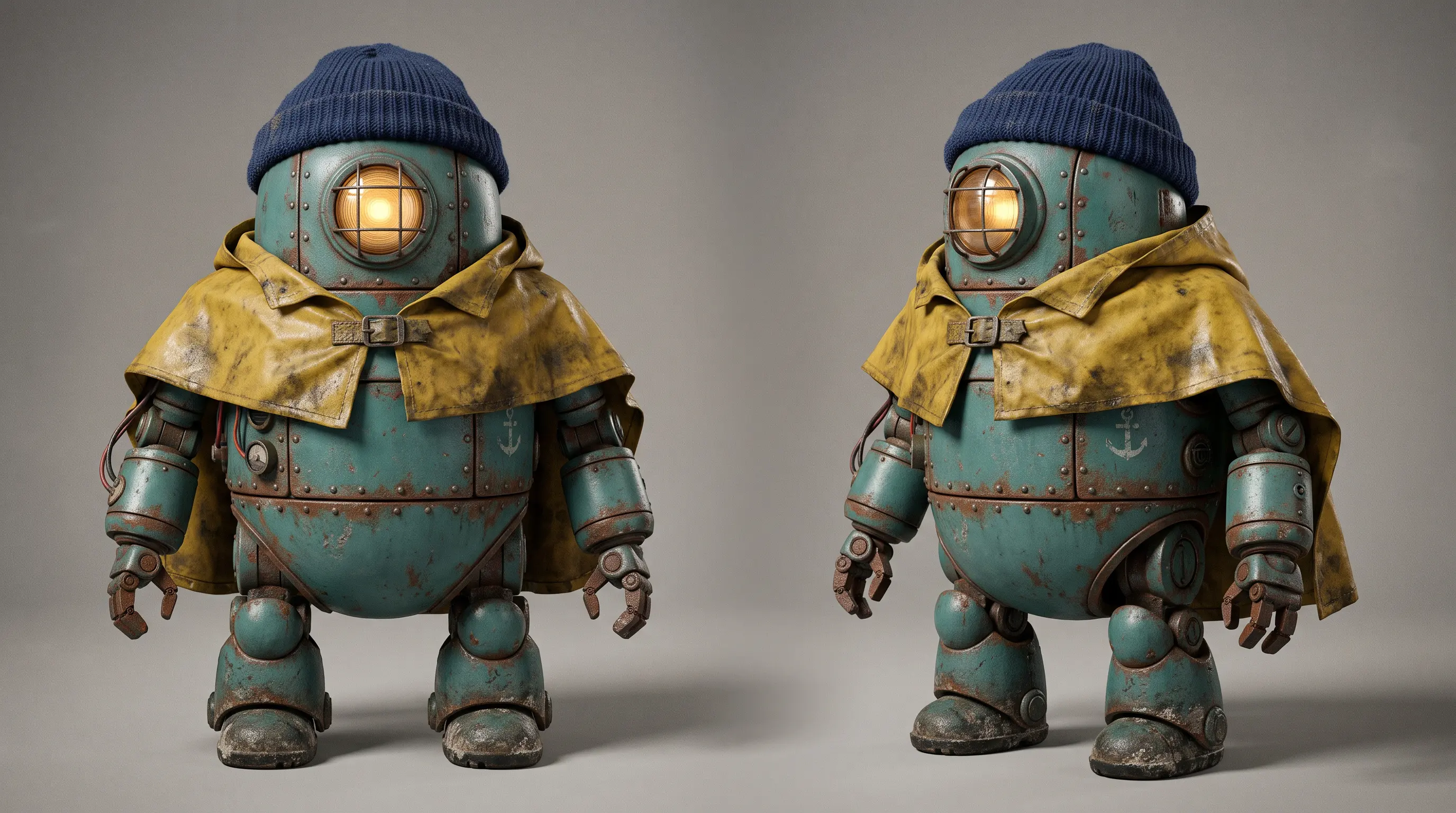
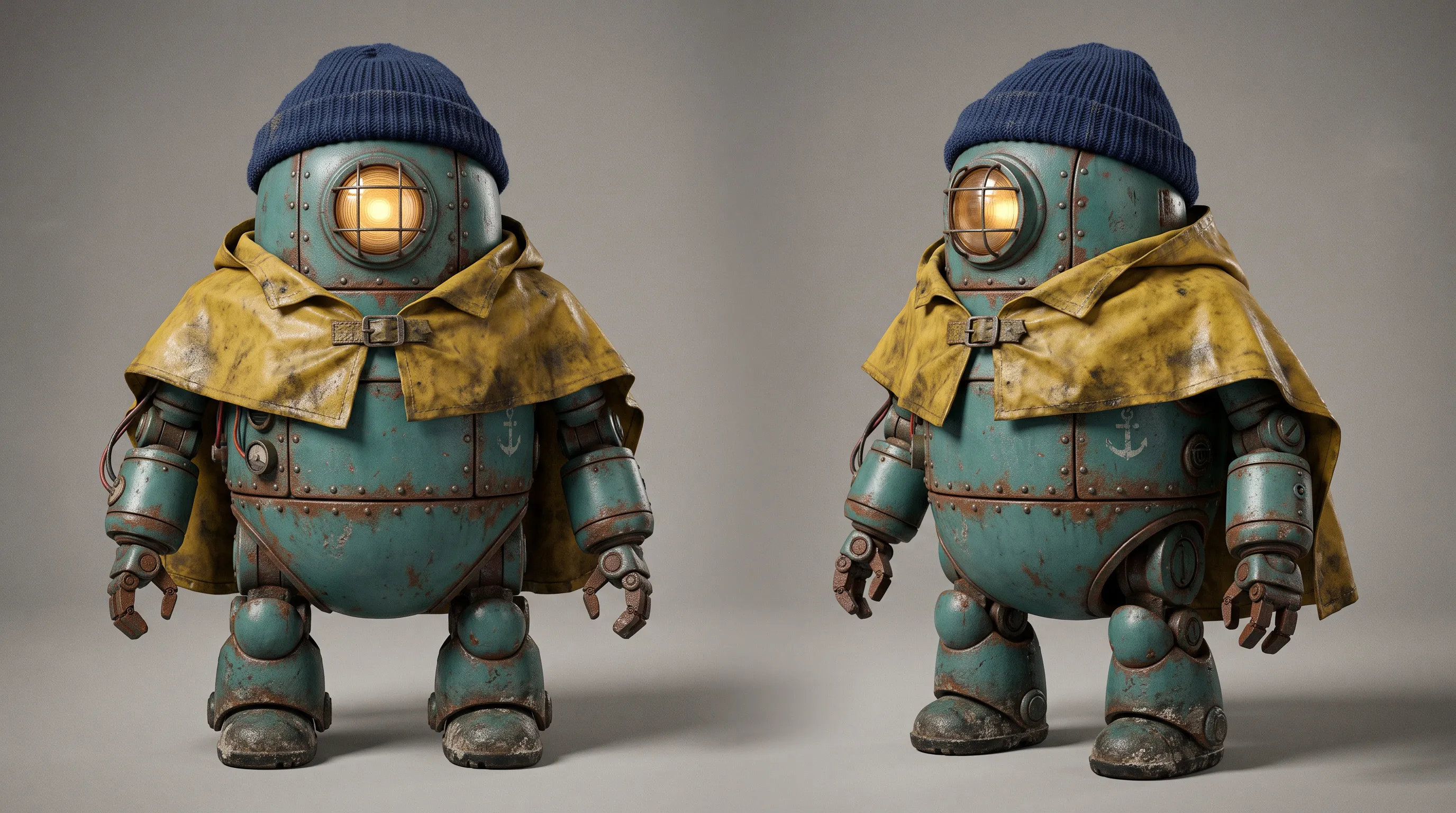
The keeper
This image is a character sheet of the robot, shown from the front and from three-quarters. It is wired into the three shots the robot appears in, which keeps his cap, cape and lamp-eye the same from frame to frame.
Character reference of a small old lighthouse-keeper robot: a rounded, weathered teal metal body with rust at the seams, one large round lamp-eye glowing warm amber, a knitted navy cap and a yellow oilskin rain cape; front and three-quarter views side by side on a neutral grey background, cinematic realism, soft studio light.
- 03 · Shots and clips
Four frames
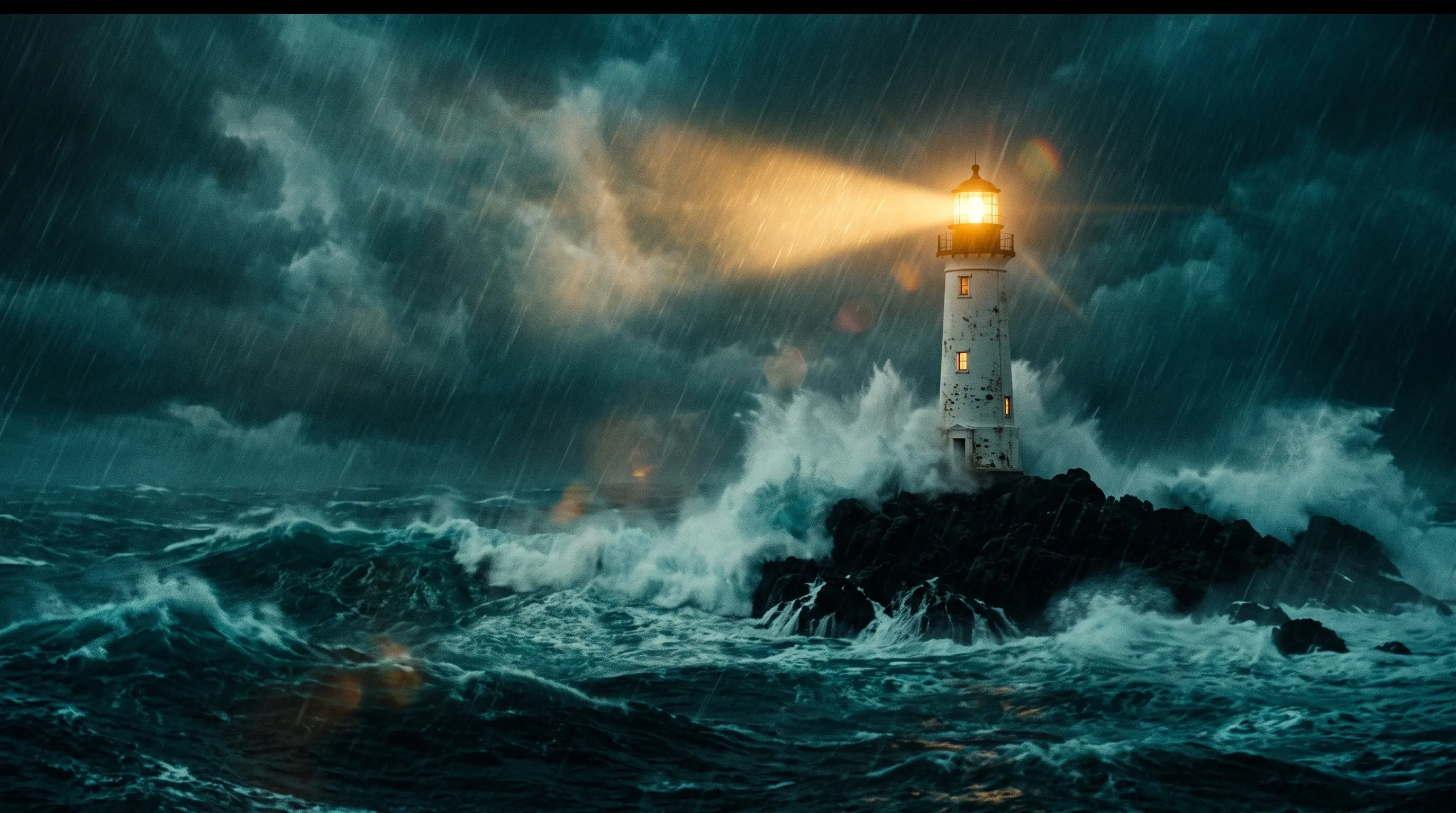
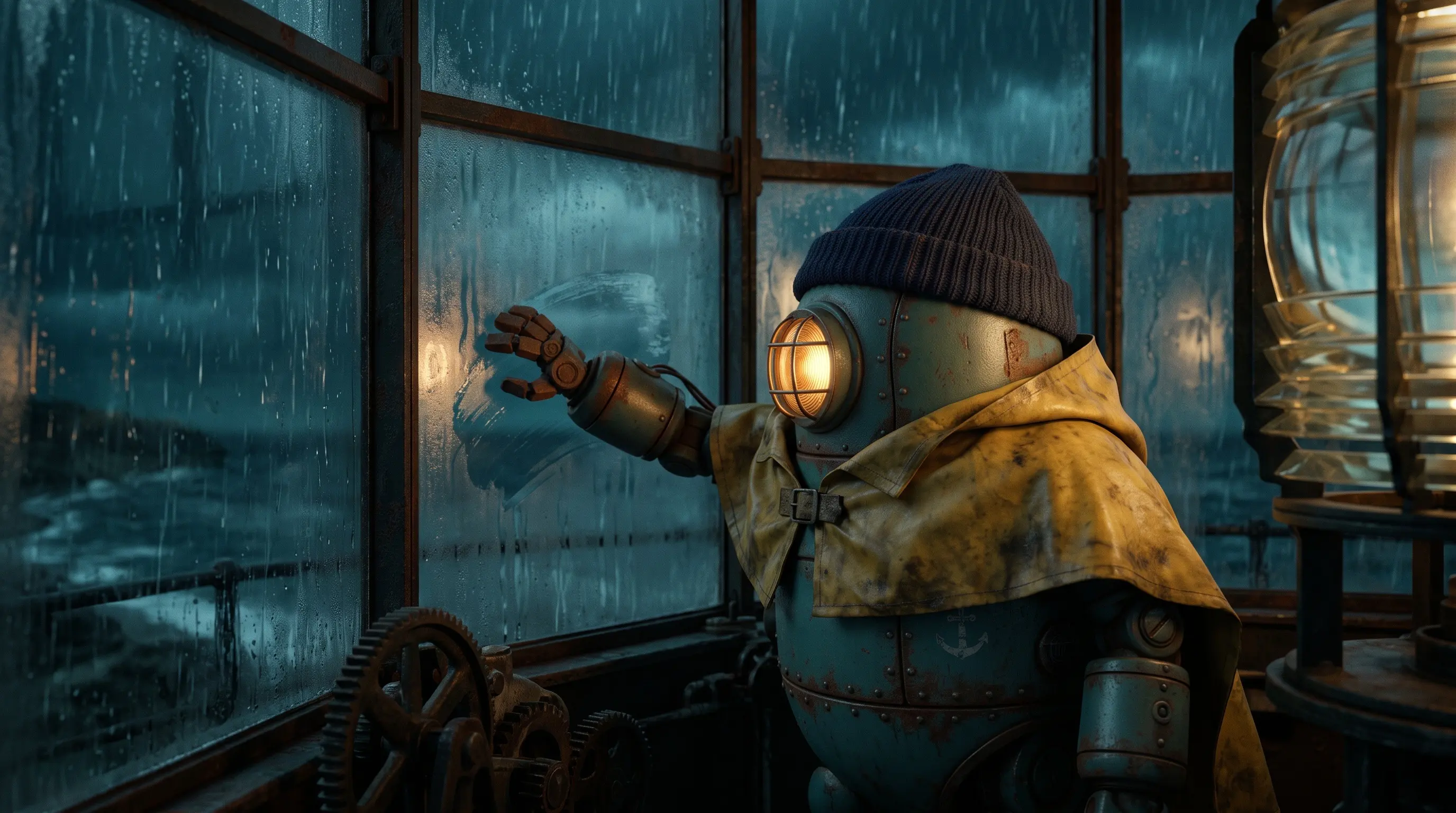
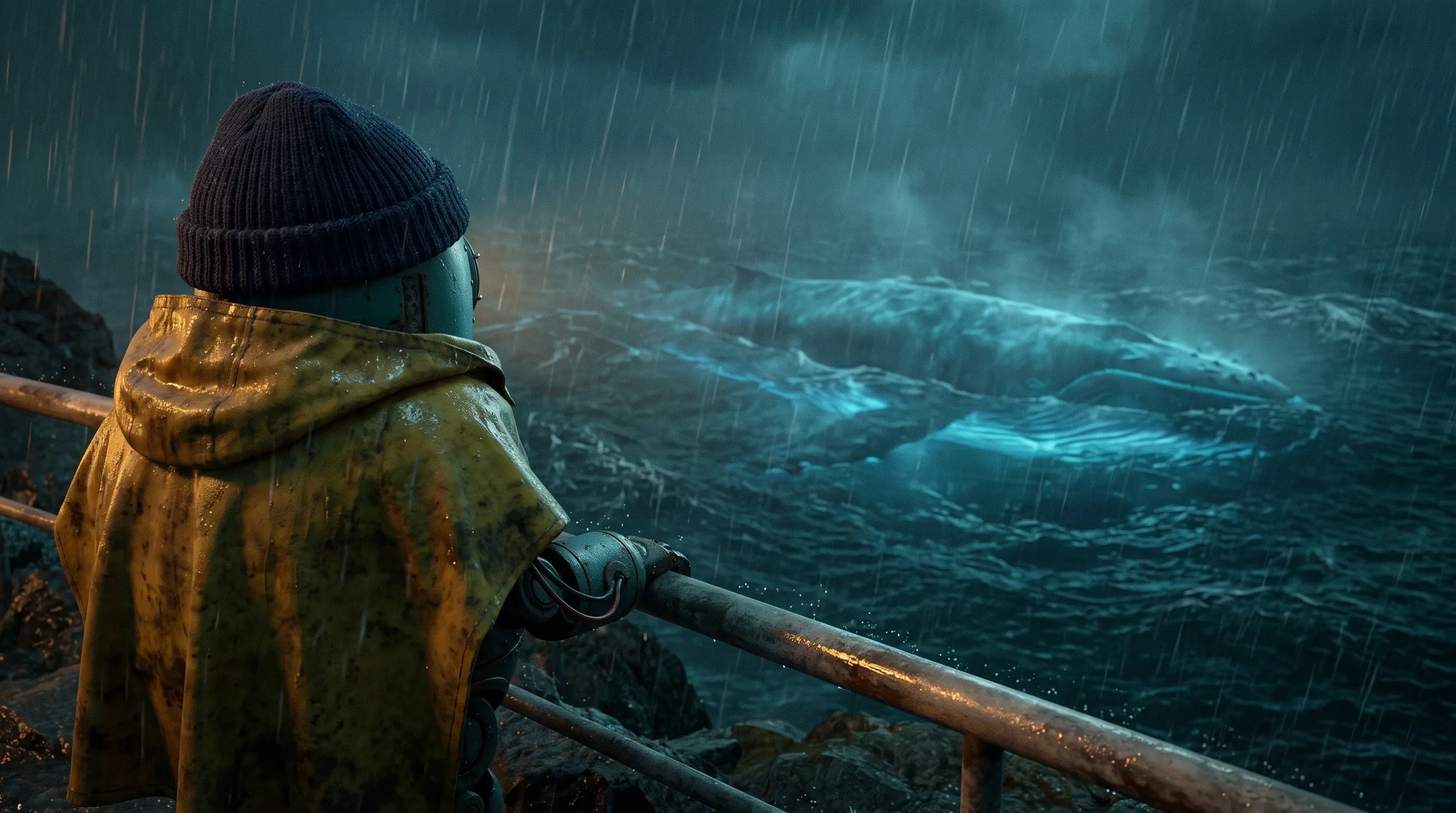
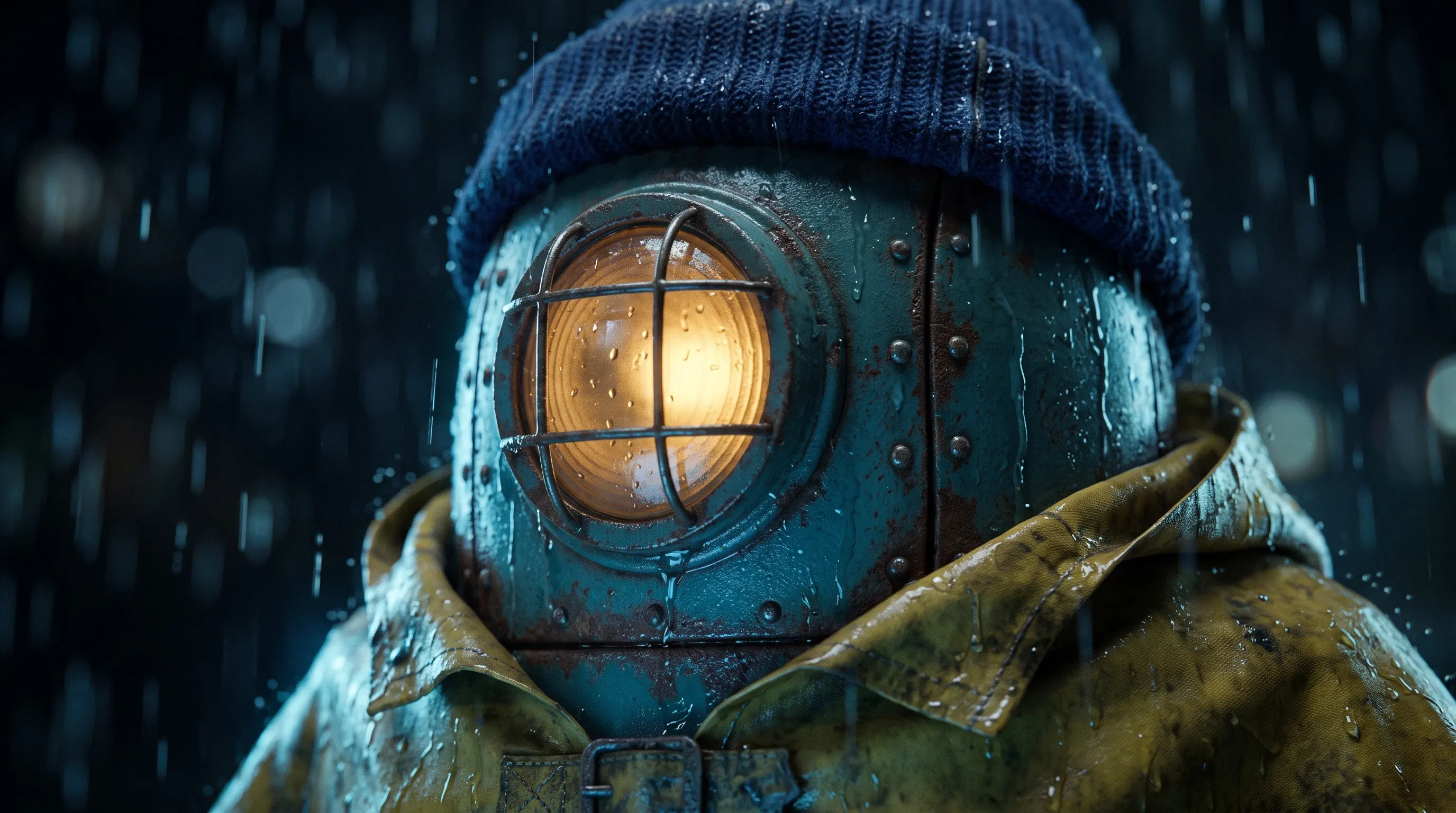
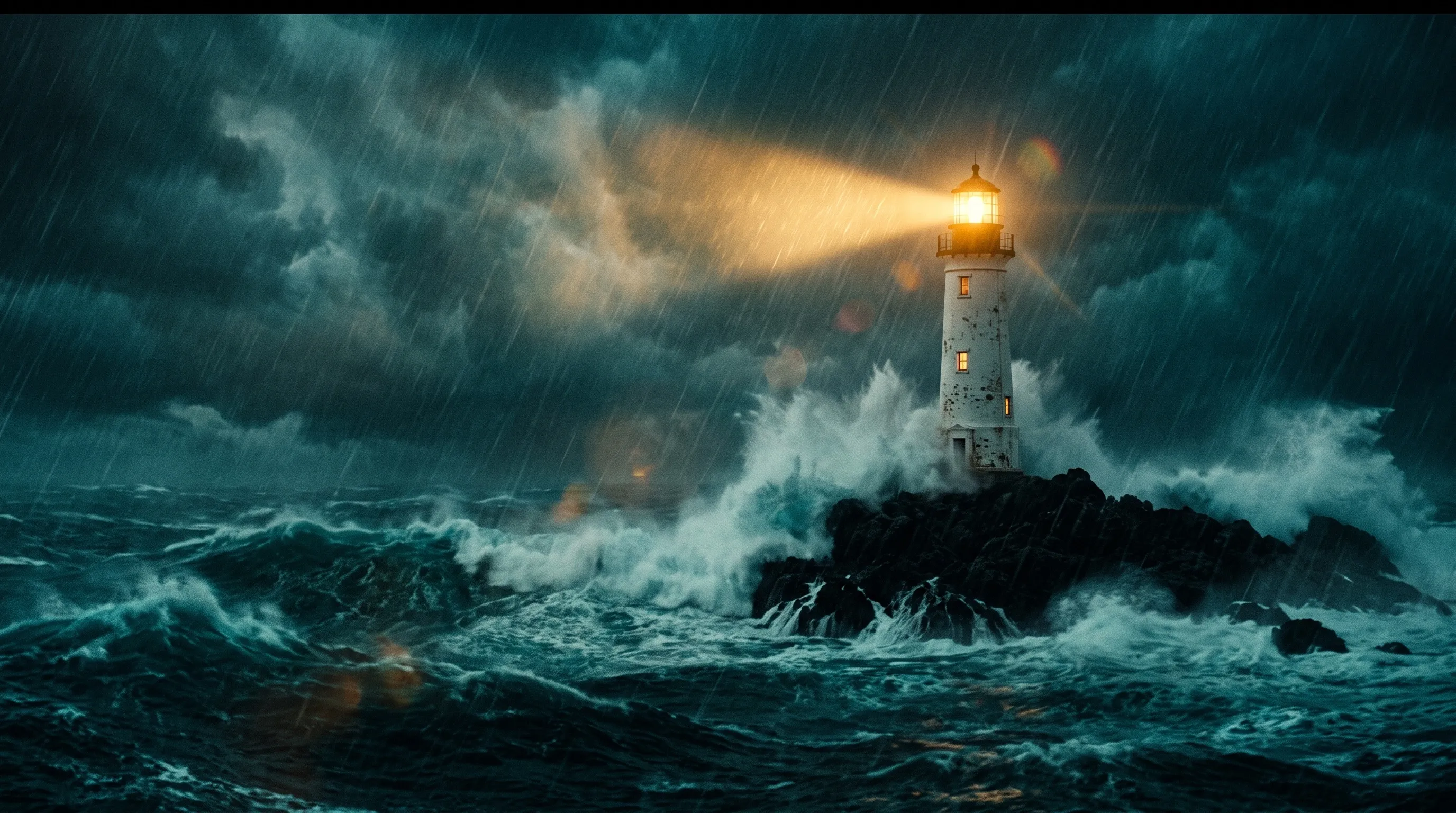
Each Image node takes its prompt from one output of the Prompt card and turns it into a frame. The three shots with the robot in them also take the character sheet as input, which is why the cap, the cape and the lamp-eye match.
Wide establishing shot at night: a lone white lighthouse on a black rock in a raging storm, huge waves breaking, its beam cutting through slanting rain. Cinematic, teal and amber palette, film grain. * Medium shot inside the lantern room: the little keeper robot from the reference wipes the fogged glass with its metal hand and freezes, its lamp-eye glowing, warm lamp light, rain streaking the windows. Cinematic, teal and amber palette, film grain. * Over-the-shoulder shot from behind the little keeper robot from the reference in its yellow rain cape: far out on the dark stormy sea, an enormous whale glows soft blue from within beneath the waves, its light rippling on the water. Cinematic, teal and amber palette, film grain. * Close-up of the little keeper robot from the reference, its face lit from below by cold blue light, its amber lamp-eye flickering softly, raindrops running down the rusty metal, shallow depth of field. Cinematic, teal and amber palette, film grain.
The storm 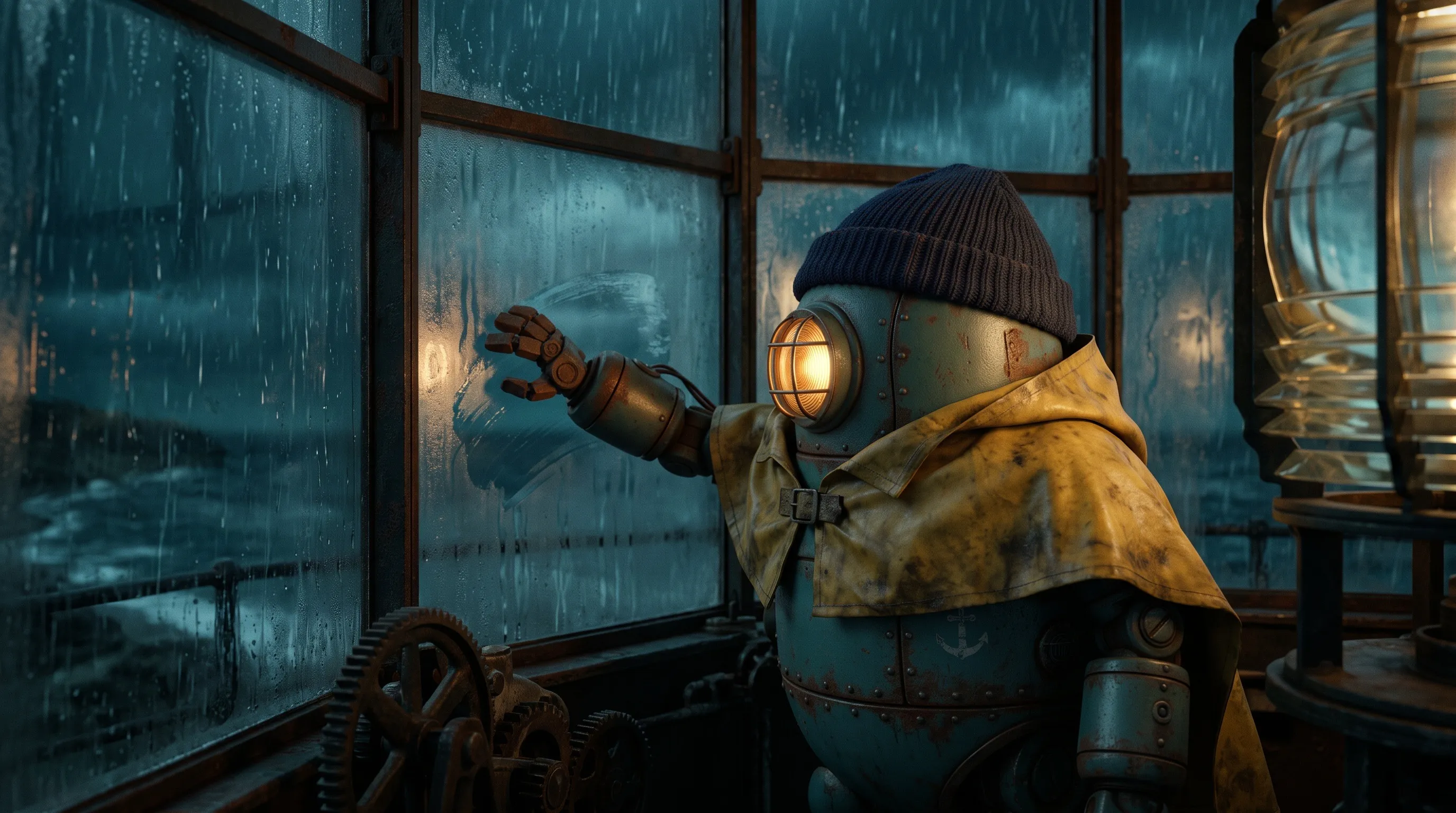
The lantern room 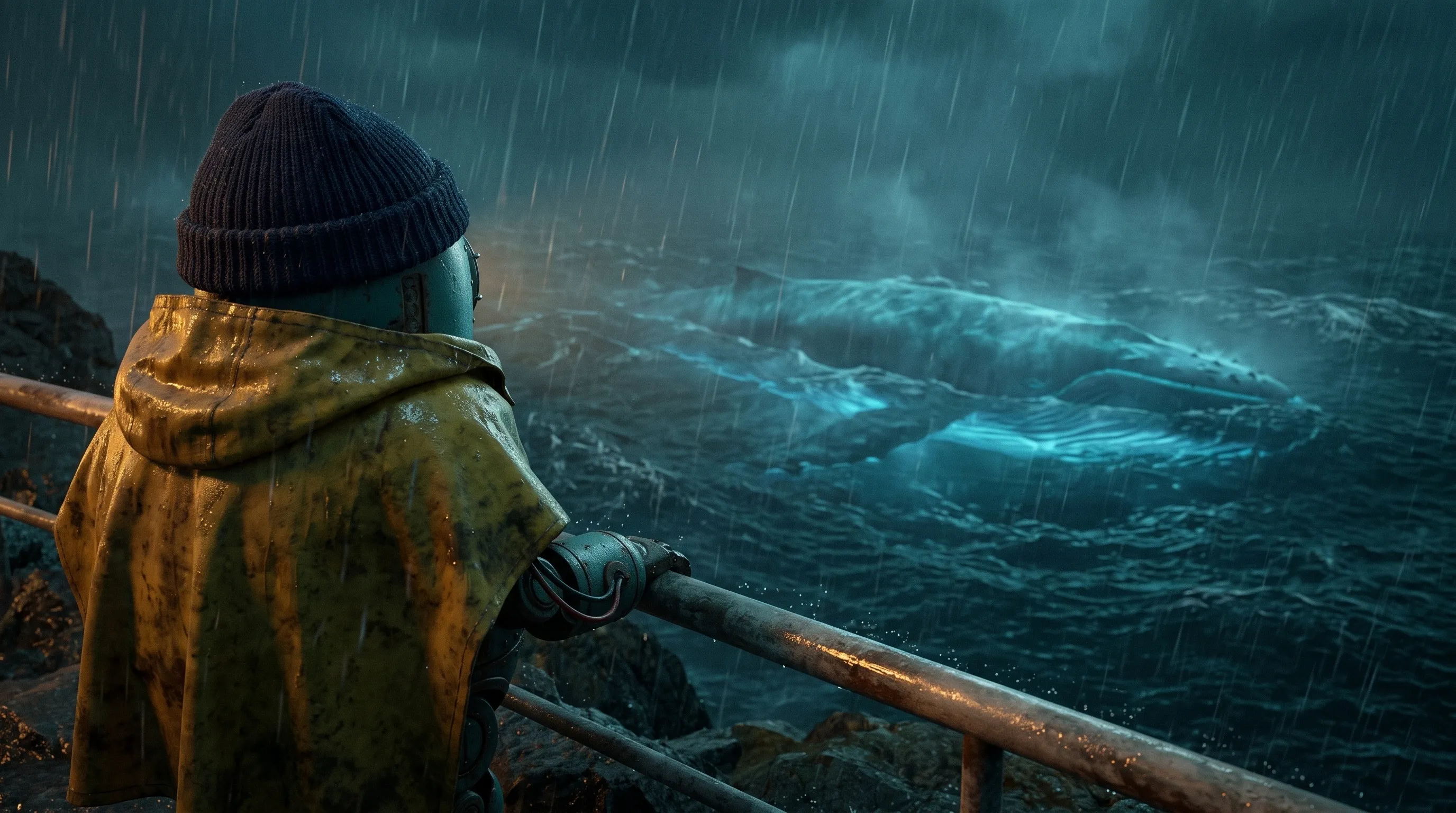
The whale 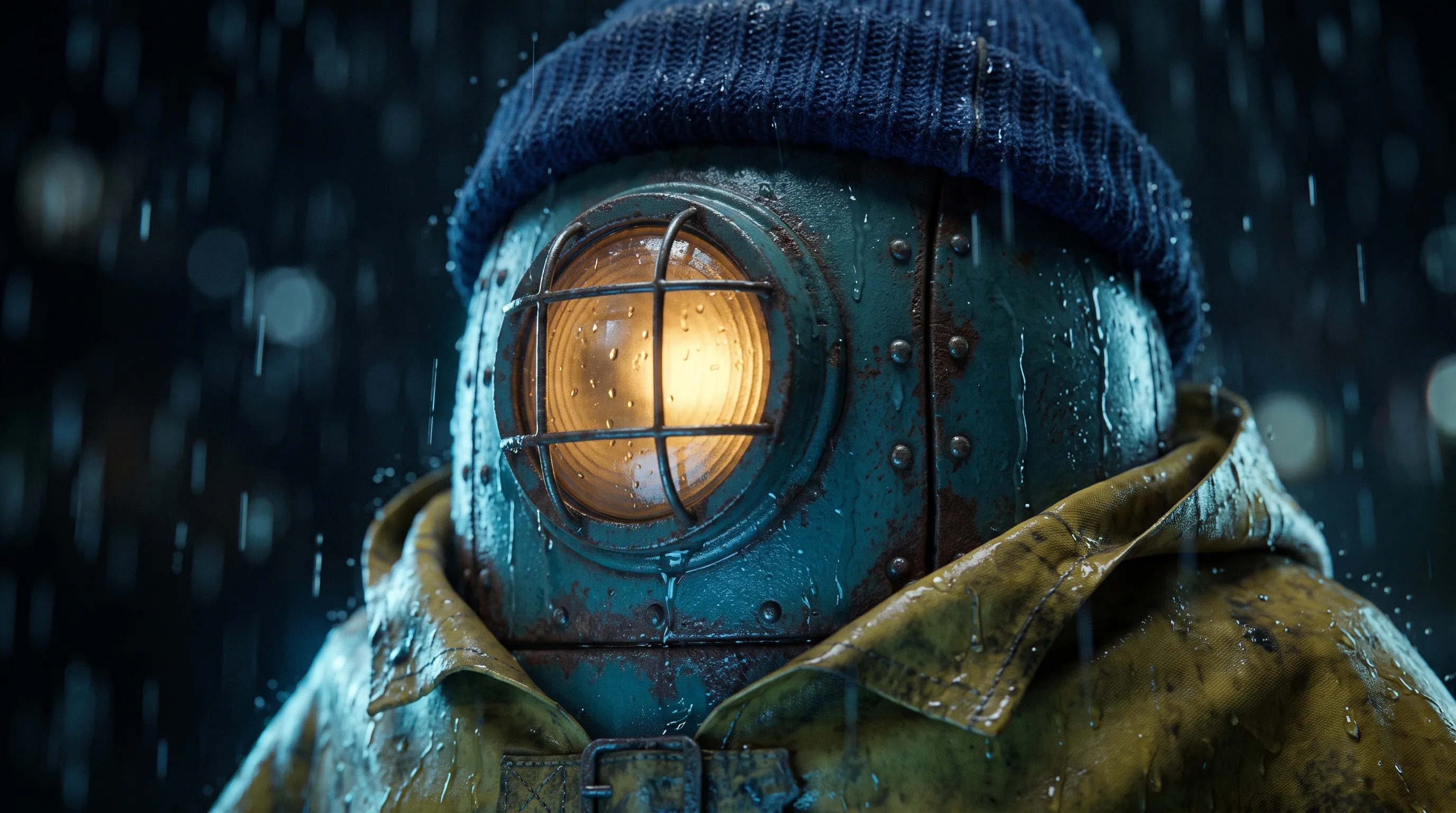
The close-up - 04 · Shots and clips
Four clips
Each frame becomes the first frame of a four-second Kling V3 clip. The prompt only describes what moves: the beam and the wave, the robot at the glass, the whale rising, the light on his face. The clips have no sound.
The beam sweeps through the rain as a huge wave breaks against the rock; slow aerial drift towards the lighthouse. The little robot wipes the glass and stops; its lamp-eye brightens as rain streams down the window. The glowing whale rises slowly beneath the waves, its light pulsing, while the robot stands still. Slow push-in on the robot's face as the blue light flickers across it and its lamp-eye glows softly.
The storm The lantern room The whale The close-up - 05 · Timeline
The cut
The timeline lays the four clips end to end and plays them as one sequence. The result is sixteen seconds, from the storm to the close-up.
Open it in
Node Composer.
- 01Download Storyboard.nodecomposer.
- 02Double-click the file, or drag it into Node Composer. Import Project (⌘O) works too.
- 03It opens as a new project, with the images and every prompt in place. Nothing in your library is overwritten.
Running a card again goes through your own provider key, at the price shown on the node.
 Coming soon